
Variable-Speed Operation
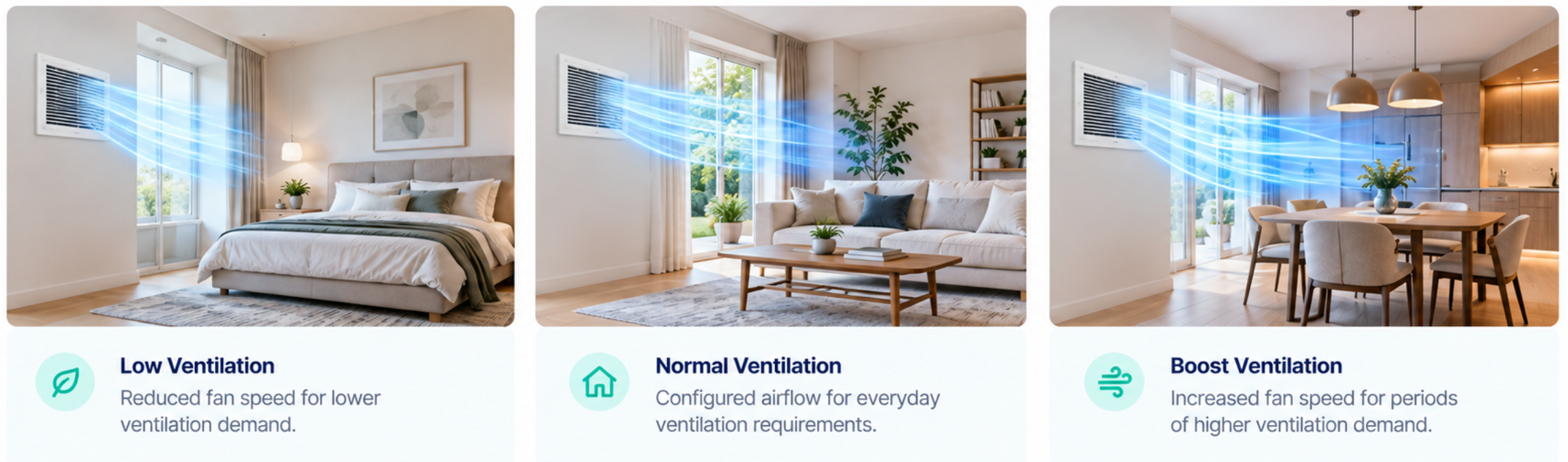
Low / Normal / Boost
BUILT FOR CONTINUOUS, VARIABLE-SPEED VENTILATION
Energy Recovery Ventilators (ERV) and Heat Recovery Ventilators (HRV) require efficient, quiet and controllable fan operation across different ventilation modes. ECM motors provide variable-speed operation and lower power consumption at reduced speeds, making them well suited for continuous ventilation applications.
With a matched blower/impeller and external driver, motor speed and control parameters can be configured around the ERV/HRV unit’s required RPM, load and operating modes.
Low / Normal / Boost
Efficient part-load operation
Reduced-speed operation
3-Speed / 0–10VPWM / Modbus
TWO AIRFLOWS, INDEPENDENT MOTOR CONTROL
ERV/HRV systems use separate supply and exhaust air paths. Each airflow path can be matched with its own centrifugal impeller, ECM motor and external driver according to the required airflow, static pressure and operating conditions.
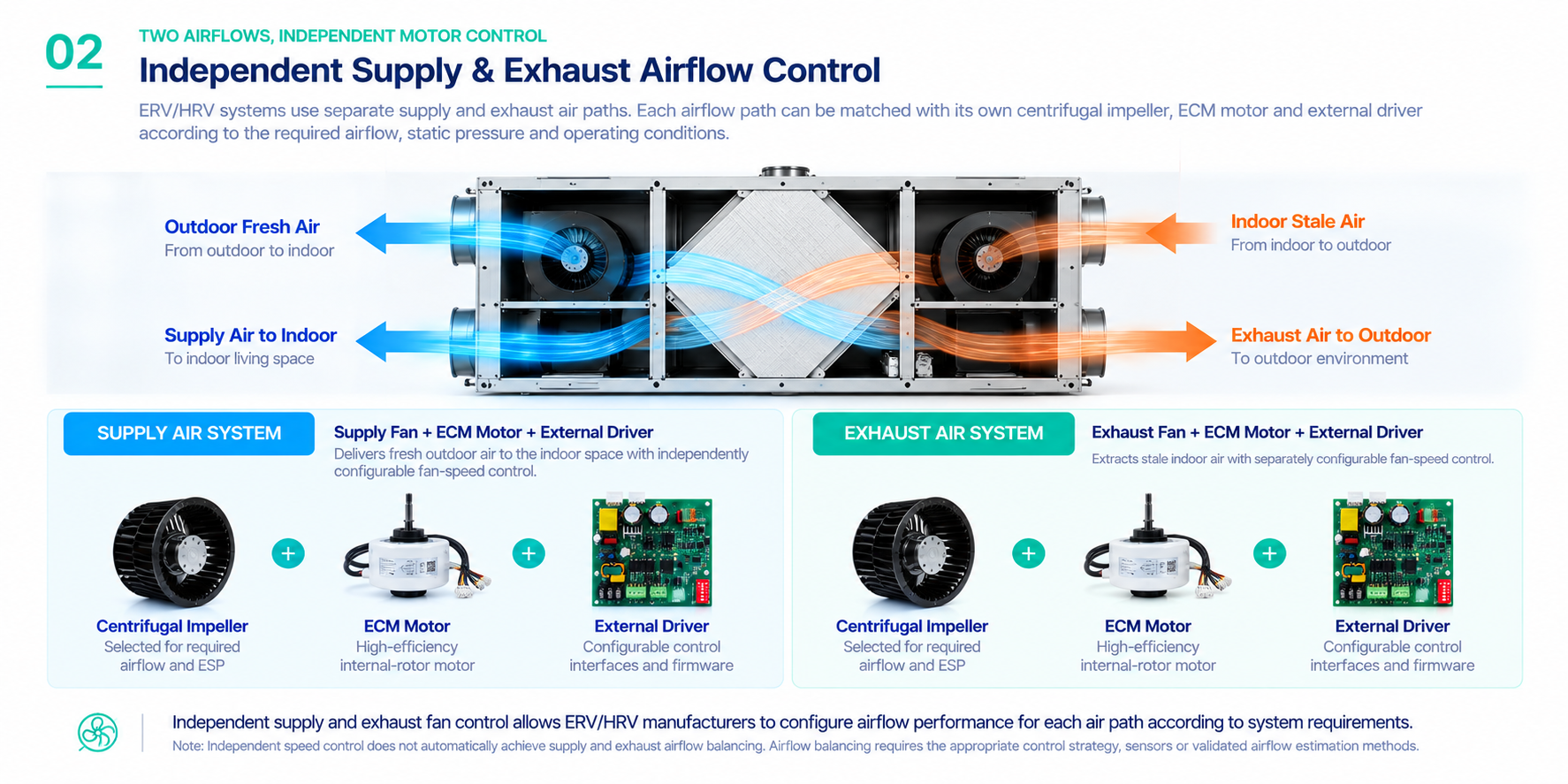
Independent supply and exhaust fan control allows ERV/HRV manufacturers to configure airflow performance for each air path according to system requirements.
Note: Independent speed control does not automatically achieve supply and exhaust airflow balancing. Airflow balancing requires the appropriate control strategy, sensors or validated airflow estimation methods.WHY INTERNAL-ROTOR ECM?
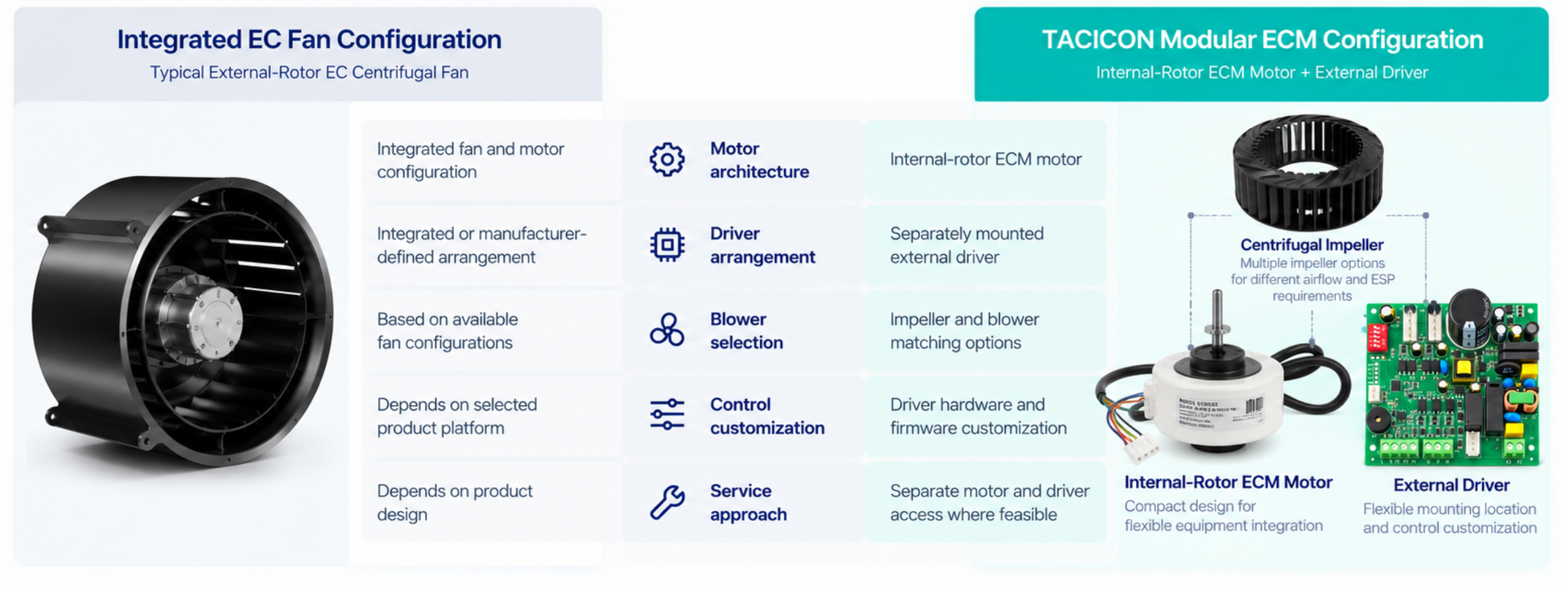
Unlike many integrated external-rotor EC centrifugal fan configurations, where the motor, impeller and electronics are combined into a single assembly, TACICON uses a modular architecture with a separately matched centrifugal impeller, internal-rotor ECM motor and external driver.
This allows ERV/HRV manufacturers to match motor and impeller performance to the required RPM, torque and operating conditions, while independently configuring the driver hardware, control interface and firmware. Rather than relying solely on a predefined integrated fan configuration, the motor and blower system can be engineered around the specific ERV/HRV application, providing greater design flexibility and more opportunities to optimize airflow, efficiency and noise performance.
FLEXIBLE VENTILATION MODES
TACICON ECM motor and external driver solutions support different ventilation modes, allowing ERV/HRV manufacturers to adjust fan speed according to actual application requirements.
AIRFLOW REQUIREMENTS UNDER CHANGING FILTER CONDITIONS
As filters accumulate dust, airflow resistance increases and the operating point of the ventilation system may change. With appropriate motor sizing, driver configuration and airflow control strategies, ERV/HRV manufacturers can manage fan performance under changing system conditions.
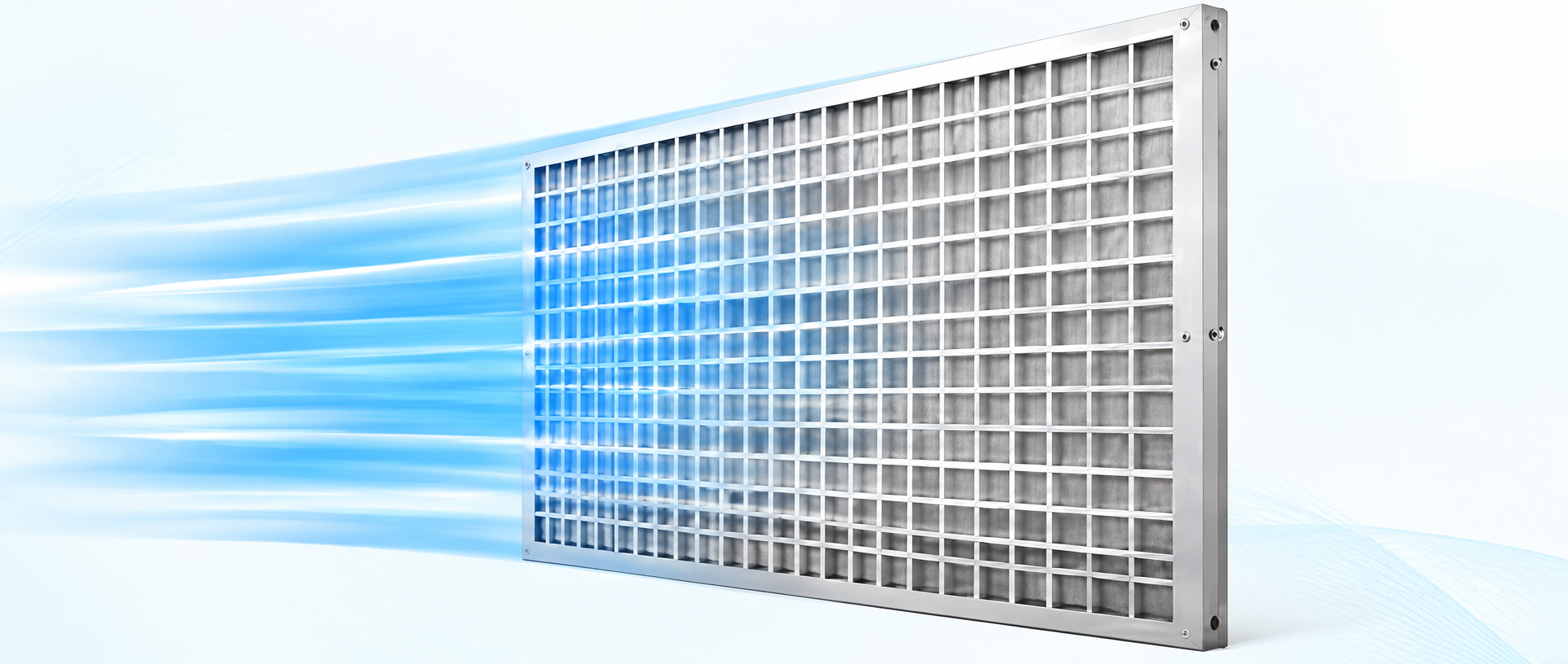
Normal airflowLower system resistance
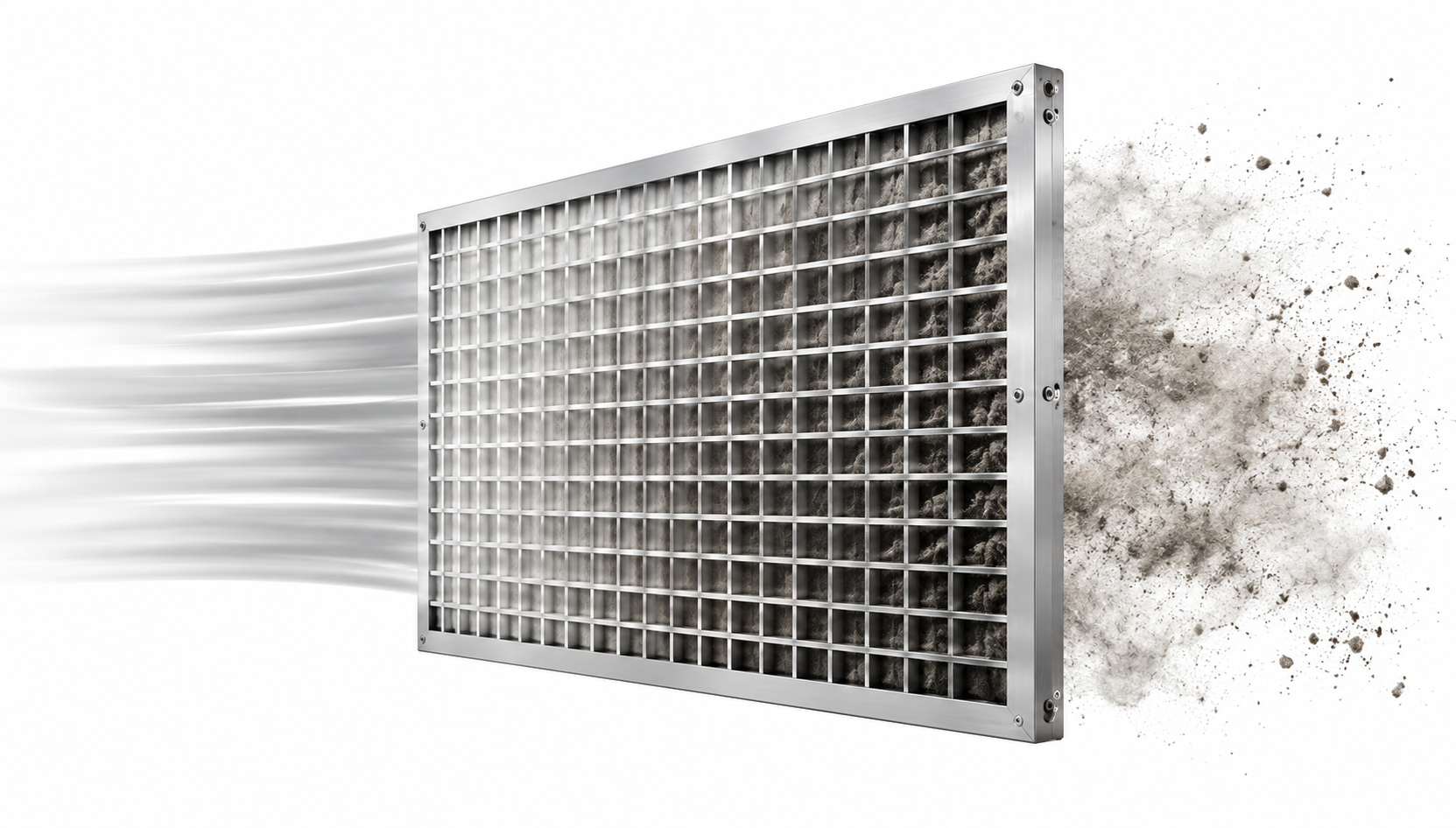
System resistance increasesand airflow can decrease
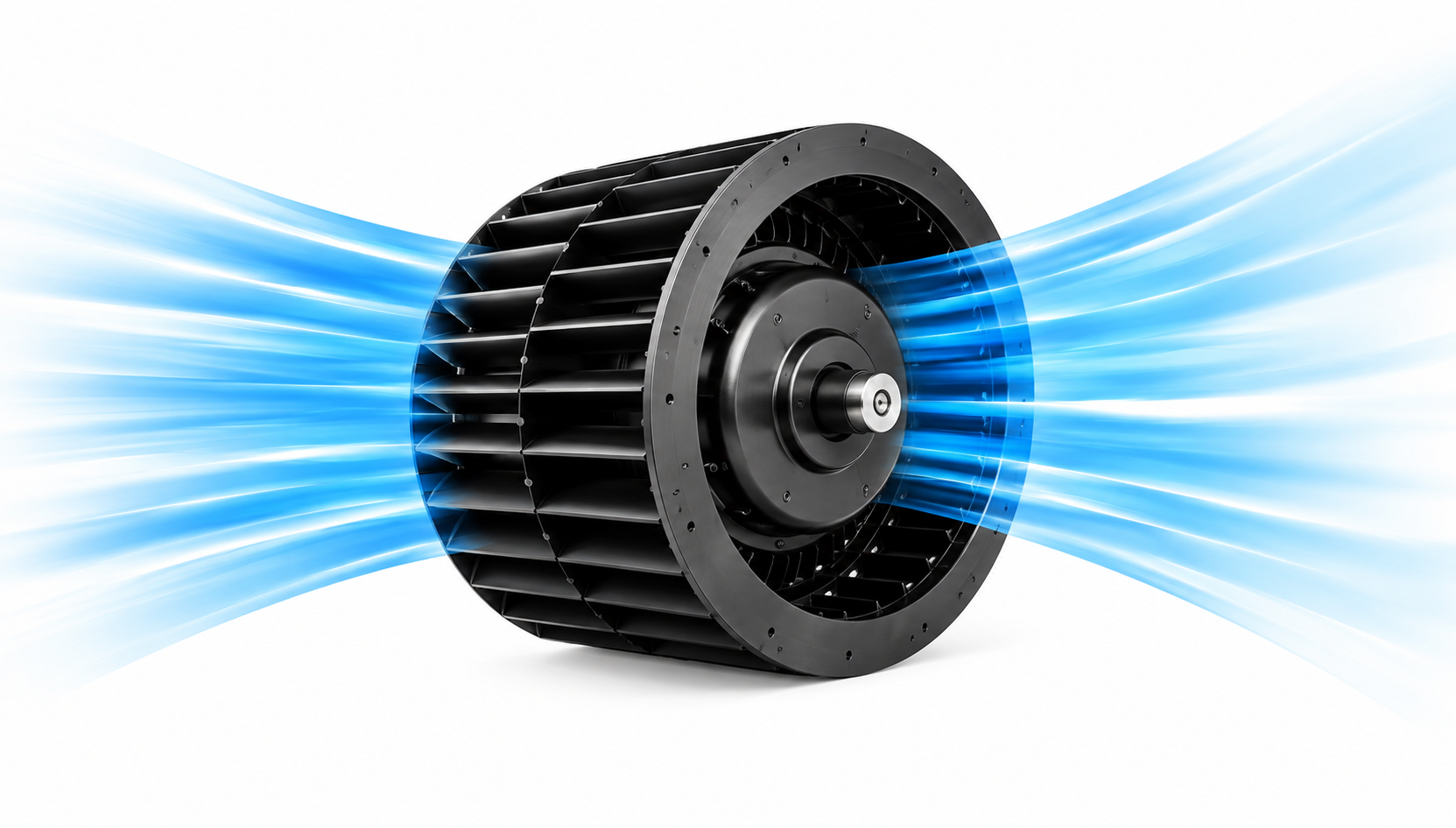
RPM adjusted according tothe equipment control strategyand required operating conditions.
Separating the motor and driver gives HVAC OEMs greater flexibility in system design, thermal management, maintenance and motor selection.
More Flexibility
for HVAC Innovation
Adapt driver hardware, firmware and control interfaces without necessarily redesigning the motor.
Support different HVAC control requirements with a common motor platform and matched driver options.
Separate motor and driver components allow more flexible maintenance and replacement strategies.
Position the driver away from motor heat and vibration for improved thermal management and system integration.
TECHNOLOGY SPOTLIGHT
Our sensorless motor driver solutions support Hall-sensor-free BLDC motor operation, with motor-specific tuning and configurable control options.
Sensorless commutation eliminates the need for Hall sensor feedback from the motor.
Driver parameters and firmware can be optimized for motor characteristics and application requirements.
Depending on the driver model, available interfaces include 3-speed, 0–10V and RS485 control.
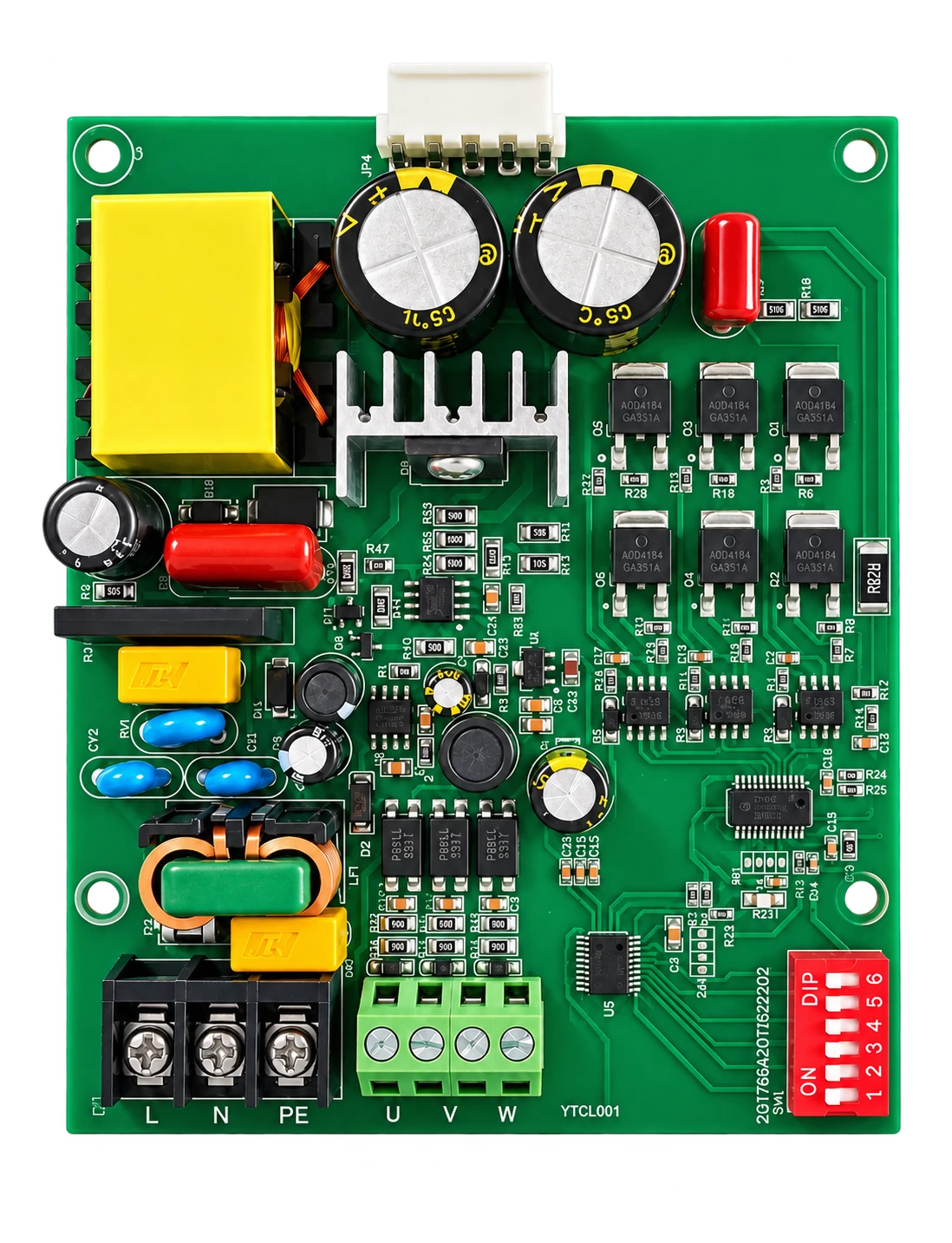
TACICON brings together ECM motors, impellers, blower assemblies, external drivers and HVAC controls to support OEM system integration.
Explore Motor & Driver Solutions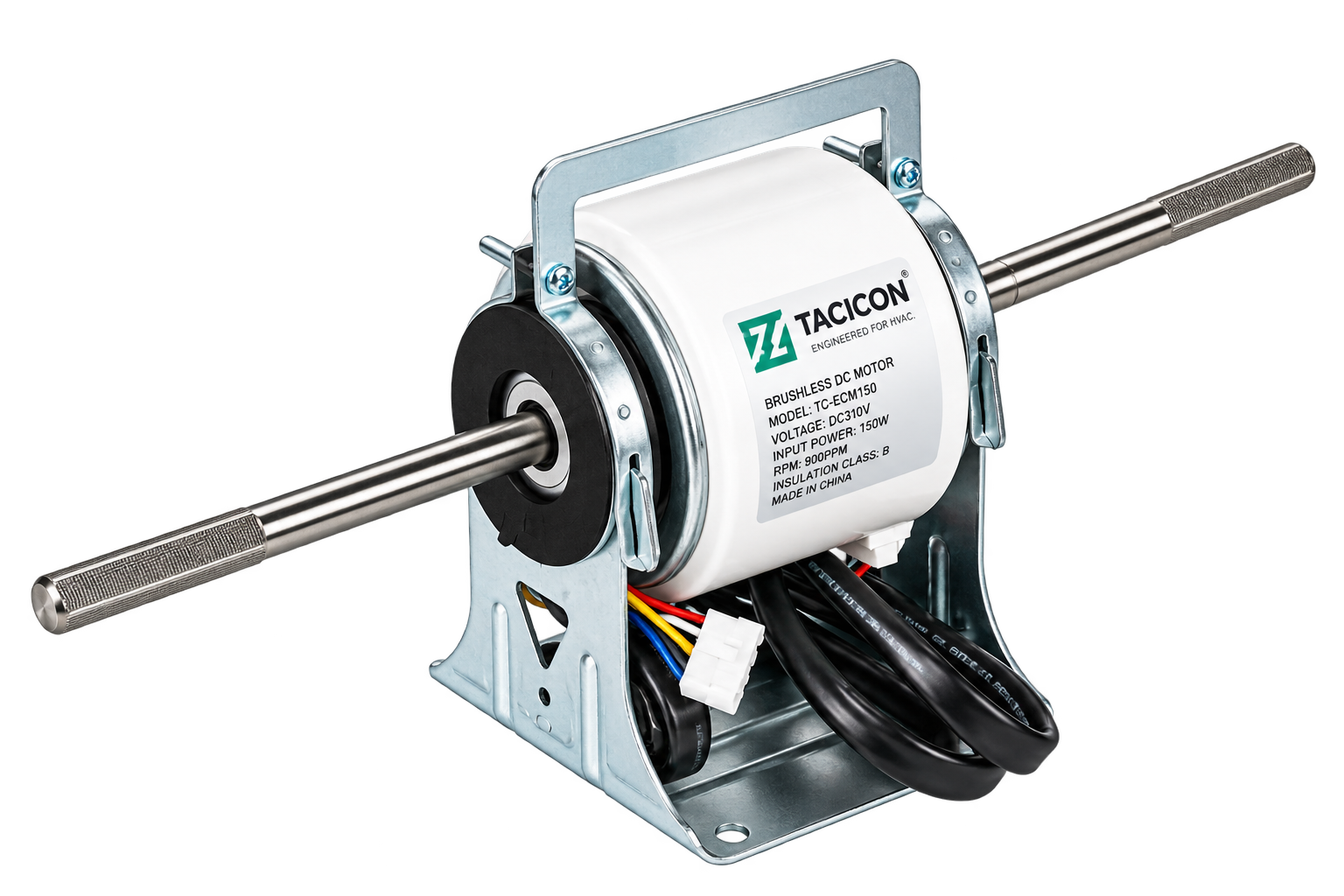
10–750W (1 HP)Custom Motor Configurations
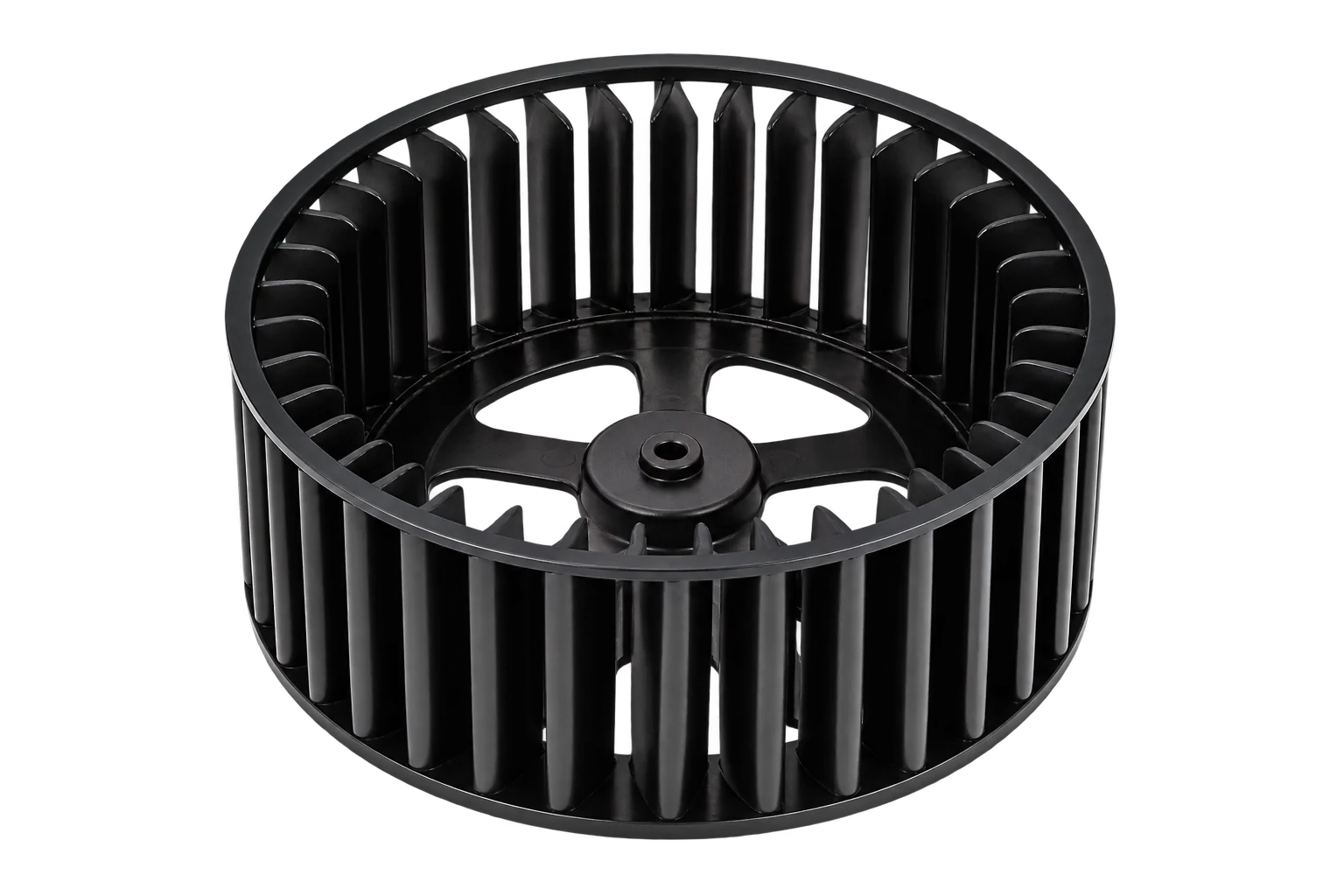
Centrifugal · Axial · Cross-FlowAirflow & Static Pressure Matching
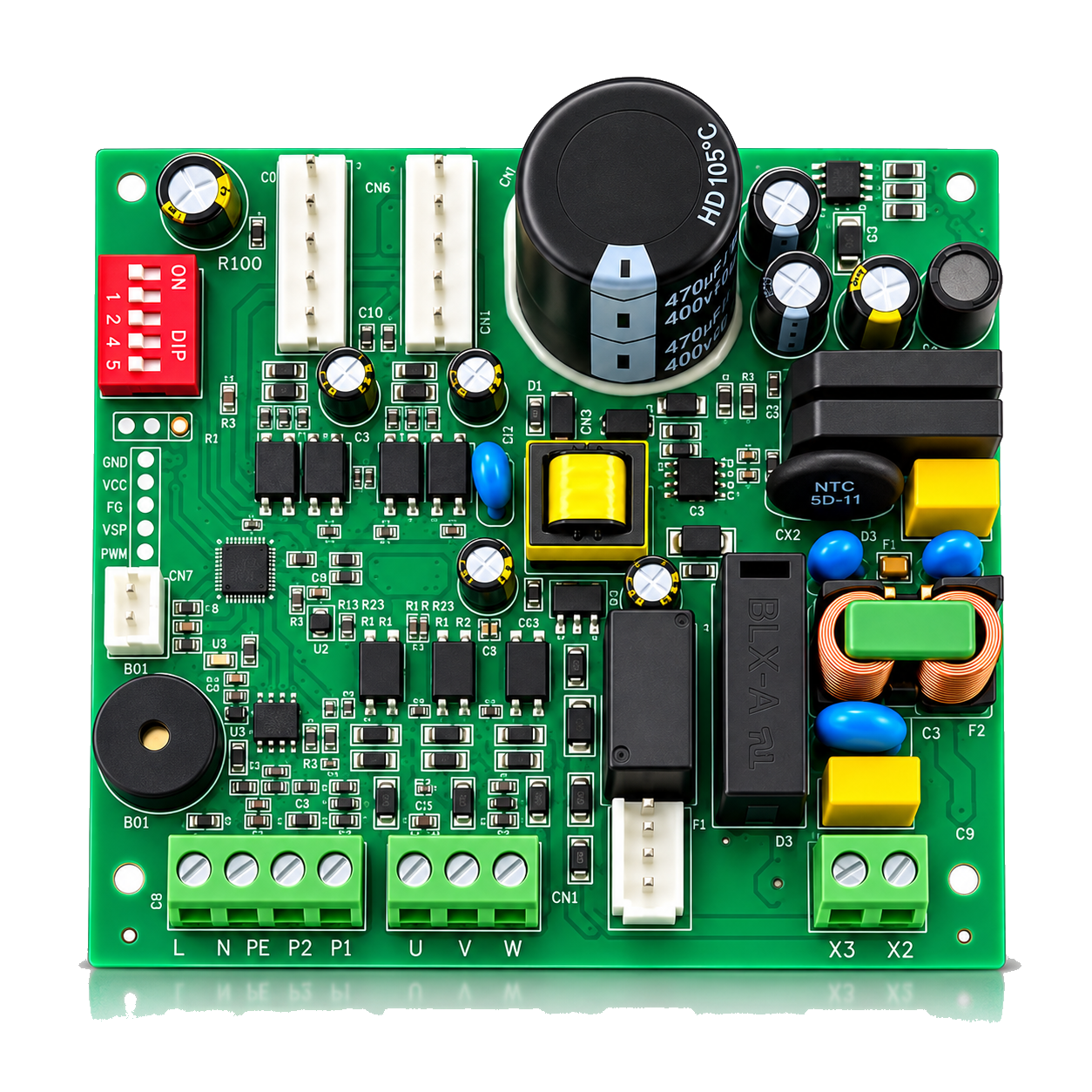
3 Speed · 0–10V · Modbus · PWMCustom Hardware & Firmware
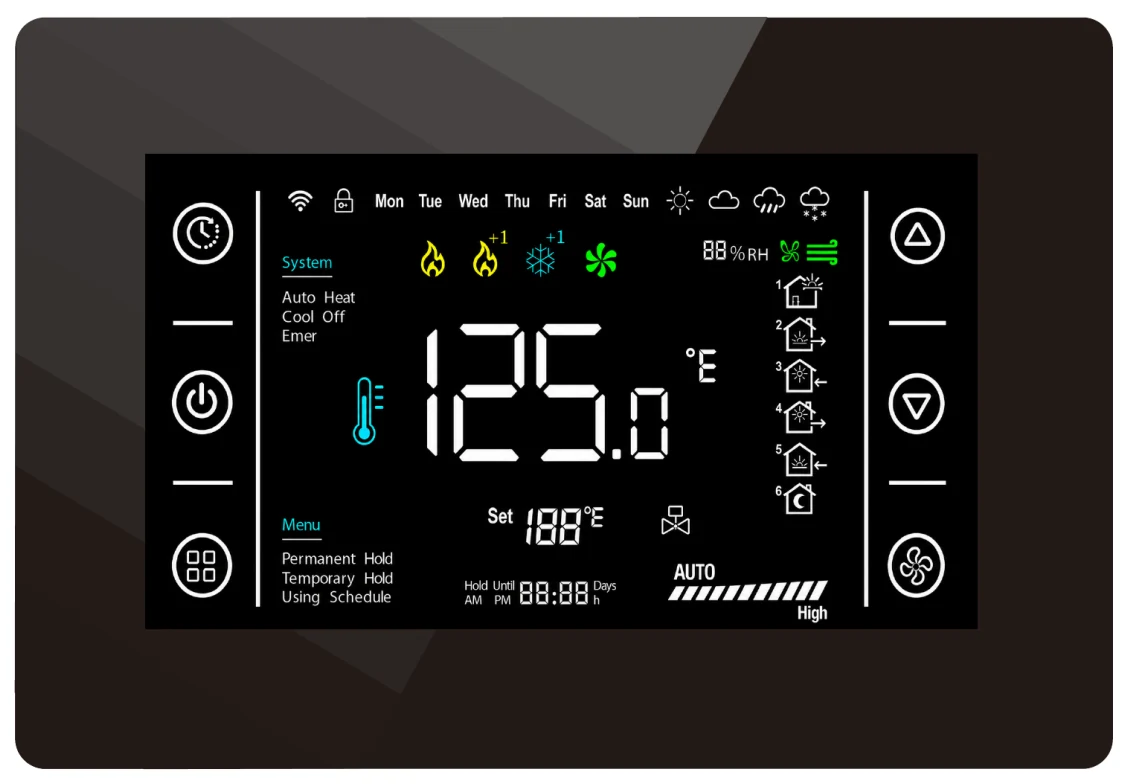
Temperature · Fan · ValveCompressor Control
Engineered to Match Your Application
We work with ERV/HRV OEMs to match the impeller, internal-rotor ECM motor, external driver and control configuration around their ventilation system requirements.
Explore Our Custom Engineering ProcessYes. TACICON provides internal-rotor ECM motors, impellers, blower assemblies and external driver solutions for both supply and exhaust fans in Energy Recovery Ventilator (ERV) and Heat Recovery Ventilator (HRV) systems. Motor and blower configurations can be matched to the airflow, static pressure, installation space and operating requirements of each air path.
Yes. TACICON's external driver architecture allows separate motor and driver configurations for supply and exhaust fans. Each fan can receive independent speed commands through compatible control interfaces, such as 0–10V, PWM, multi-speed inputs or RS485/Modbus, depending on the selected driver model. Airflow balancing depends on the overall system control strategy.
Yes. TACICON can provide matched ECM motors, centrifugal impellers, blower housings and external drivers for ERV/HRV applications. Blower assemblies can be configured according to airflow, external static pressure (ESP), mechanical dimensions, mounting requirements and noise targets.
Yes. TACICON evaluates the required airflow (CFM), external static pressure (ESP), blower performance characteristics and motor speed and torque requirements to develop suitable ECM motor and blower configurations. Supply and exhaust air paths can be evaluated separately, with performance verified through application-specific testing.
Yes. ECM motor speed can be adjusted through a compatible external driver as filter resistance changes. Depending on the system design, speed adjustments may be commanded by the HVAC controller or managed through a suitable airflow control algorithm. Maintaining constant airflow requires an appropriate control strategy and application-specific validation; sensorless motor control alone does not guarantee constant airflow.
Please provide the required supply and exhaust airflow (CFM), external static pressure (ESP), operating voltage, motor power and speed requirements, blower dimensions, mounting details and preferred control interfaces. Existing motor specifications, equipment drawings, noise requirements and operating conditions are also helpful for evaluating a matched ECM motor, blower and external driver solution.
LET’S BUILD A SMARTER HVAC SOLUTION TOGETHER
Send us your application requirements, motor specifications, drawings or control requirements.